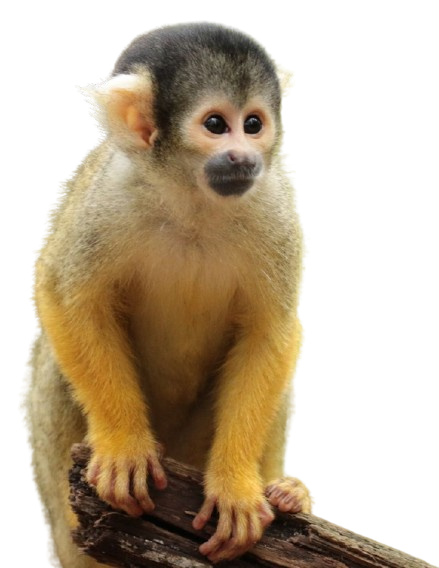
Homecoming Prep Guide
Preparing for your Squirrel Monkey
Bringing home a squirrel monkey is a life-changing event. Success starts weeks before they arrive. Use this professional checklist to ensure your home is a sanctuary, not a hazard.

The Infrastructure: Building the "Jungle"
Squirrel monkeys are vertical explorers. They don't just need a cage; they need a tiered ecosystem.
- Cage Dimensions: Minimum 6ft (H) x 4ft (W) x 3ft (D). Larger is always better.
- Climate Control: Maintain a consistent 75-80°F (24-27°C). Use ceramic heat emitters, never heat rocks.
- UVB Lighting: Full-spectrum UVB bulbs are required for Vitamin D3 synthesis and bone health.
- The 3-Level Rule: Ensure there are distinct zones for sleeping (top), eating (middle), and playing (bottom).
Safety & "Monkey-Proofing"
If a squirrel monkey can touch it, they will investigate it. You must secure your home like you would for a toddler—but one that can climb to the ceiling.
- Locks & Latches: Primates are escape artists. Use carabiners or key-locks on all enclosure doors.
- Electrical Safety: Encase all visible wires in heavy-duty PVC or cord protectors.
- Plant Audit: Remove Lilies, Azaleas, and Ivy. Stick to non-toxic palms or ferns.
- Screen Check: Ensure window screens are reinforced; a standard screen won't hold an excited squirrel monkey.
⚠️ Critical Setup Note
Before the monkey arrives, locate an Avian & Exotic Vet. Standard dog/cat vets are rarely equipped to handle primate physiology. Have their emergency number taped to the side of the enclosure.
The Nutrition Starter Kit
Do not wait until they arrive to source food. You need a 14-day supply of their current diet to prevent digestive shock.
- Primate Pellets: High-quality "New World" monkey biscuits (Mazuri or similar).
- Supplements: Liquid Vitamin D3 and calcium powder.
- Foraging Tools: Hanging fruit skewers and puzzle feeders to slow down mealtime.
- Water Systems: Both a drip bottle and a heavy ceramic bowl to ensure constant hydration.
The "Settle-In" Protocol
The first 48 hours dictate the future of your bond. The goal is Calm Observation.
- No Visitors: Keep the house quiet. No "welcome home" parties for at least 7 days.
- Scent Exchange: Place an old (clean) t-shirt of yours in their sleeping area to familiarize them with your scent.
- Body Language: Avoid direct, prolonged eye contact initially—in the primate world, this can be seen as a challenge.
- Routine: Start your feeding and cleaning schedule immediately. Predictability equals safety.