Common Questions
Expert Guidance for New Primate Families
Legality varies significantly by state, county, and even city. Tiny Tails Sanctuary requires all prospective owners to provide proof of local legality or the necessary permits (such as USDA or state-specific exotic permits) before a purchase can be finalized.
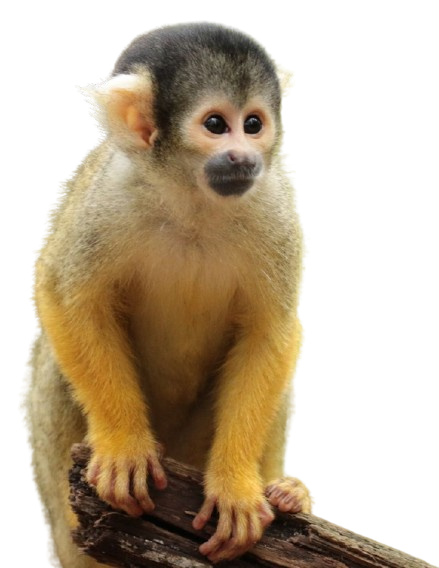
With proper nutrition and veterinary care, primates are long-term commitments. Marmosets live 12–20 years, Squirrel Monkeys 15–20 years, and Capuchins can live 35–45 years. We encourage families to consider their long-term lifestyle before adopting.
Generally, no. While some monkeys can be taught to use specific areas, they do not have the same sphincter control as dogs. Most owners use specially designed primate diapers or "drag bags" when the monkey is out of their enclosure.
Interactions should always be strictly supervised. While some primates coexist peacefully with calm dogs, predatory instincts in pets or the high energy of the monkey can lead to stress or injury. We recommend separate play areas for safety.
The first two days are about decompression. We recommend a "Quiet Zone" with minimal visitors. The monkey will spend most of its time observing you from its enclosure as it learns the sounds and scents of its new home.
Primates share about 93-98% of our DNA, making them highly susceptible to human illnesses like the common cold, flu, and herpes simplex (cold sores). Our protocols protect our nursery from viruses that can be fatal to small primates.
A standard small-animal vet will not suffice. You must have a licensed **Avian and Exotic Veterinarian** with primate experience. Tiny Tails Sanctuary will verify that you have a local exotic vet on file before the handover.
Primates are social creatures. If you are not able to spend 6–8 hours a day interacting with your monkey, we strongly suggest a pair. Solitary primates can develop behavioral issues due to boredom and loneliness.
On average, expect to spend $100–$250 per month depending on the breed. This covers professional New World biscuits, fresh organic produce, specialized vitamins, and enrichment treats.
Yes! Capuchins are incredibly intelligent and will use items as tools to reach food or solve puzzles. This means they require high-level mental enrichment daily to keep their minds engaged.
While possible with a harness and lead, we advise against it in high-stress or crowded areas. Over-stimulation can cause anxiety, and exposure to public germs poses a significant health risk to the animal.
Any animal with teeth can bite. Biting is usually a form of communication—expressing fear, over-stimulation, or dominance. Proper socialization and learning to read primate body language are key to preventing nips.
Most New World primates thrive at 75°F–82°F. If your home is cooler, you must provide a "basking spot" with a ceramic heat emitter inside their enclosure so they can regulate their body temperature.
Tiny Tails Sanctuary provides a "Right of First Refusal." If your circumstances change, we will help rehome the primate to a verified family or take them back into our sanctuary to ensure their lifelong safety.
Yes! Primate health depends on Vitamin D3 synthesis. If they do not have access to natural, unfiltered sunlight, you must provide high-quality UVB lighting (specifically for primates) for at least 8–10 hours a day.